
Medical assistant vs phlebotomist
In the medical assistant vs phlebotomist comparison, both jobs earn about the same, but the daily work and the training are quite different. Phlebotomists focus mainly on blood draws. Medical assistants cover a broader set of tasks, which may include blood draws, and their schooling often lasts longer.
Medical assistant salary in every state
What does each job pay?
The Bureau of Labor Statistics uses median pay, meaning the midpoint: half of workers earn above it and half below it. Median yearly pay was similar for the two roles in May 2025.
| Job | Median yearly pay (May 2025) |
|---|---|
| Phlebotomist | $45,230 |
| Medical assistant | $45,690 |
With a gap that small, pay alone is unlikely to settle the choice. The length of study and the daily tasks you want will probably matter more.
How long does training take and what does it cost?
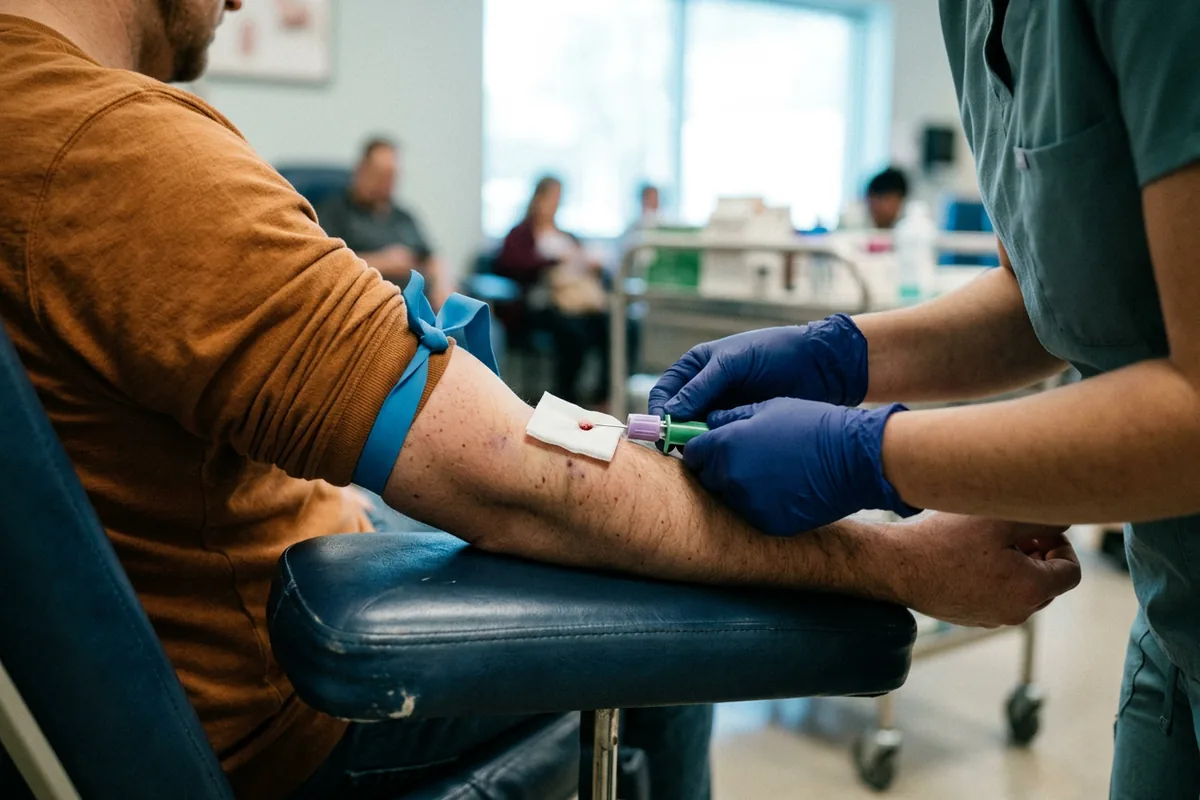
Phlebotomy means taking blood from a vein. You can find phlebotomy courses at community colleges, vocational schools and technical schools, and they often finish in under 1 year.
Medical assisting is taught at community colleges, technical and vocational schools, and universities. These programs usually run about 1 to 2 years. Federal college data from 378 career schools that report program length show many of them take less time:
| Time to complete a medical assistant program | Career schools reporting |
|---|---|
| Up to 6 months | 19 |
| 7–9 months | 257 |
| 10–12 months | 59 |
| Over 12 months | 43 |
At those schools the median program takes 9 months, with the shortest lasting 2 months and the longest 32 months.
Price varies by school type. At 392 career schools that price the whole program, the median published price for the entire program was $17,257 in 2023-24, including tuition, fees and books. At 437 public colleges, a year of full-time study carried a median in-district tuition and fees of $4,346.
Can a medical assistant draw blood?
Some of them do. Medical assistants may handle blood and other specimens and get them ready for laboratory testing, and some also do the blood draw themselves. For phlebotomists, drawing blood is the core duty.
Typical workplaces for each role
The jobs also cluster in different settings.
- Medical assistants: 56% work in physicians’ offices, the largest share.
- Phlebotomists: 36% work in hospitals, while medical and diagnostic labs employ 33%.
Future job openings
Certification and state rules for phlebotomists
Some states require phlebotomists to complete an accredited program, hold a license, or earn certification. Employers may also prefer candidates with professional certification, so it is wise to check your state’s rules before picking a program.
Medical assistant programs nationwide
Our list covers 1,094 programs for medical assisting across every state and Washington, DC. Of those, 484 are accredited by CAAHEP or offered at schools accredited by ABHES.
- 30 programs teach their classes online, with the clinical hours in person; 14 of them hold accreditation.
- An associate degree in medical assisting is available at 354 schools.
- Federal student aid is available at 1,049 schools.
Questions people often ask
Which job pays more, medical assistant or phlebotomist?
Medical assistants, by a small margin: a median of $45,690 a year versus $45,230 for phlebotomists in May 2025. The difference is a few hundred dollars, so it probably should not decide your choice.
Is phlebotomy a dead-end career?
The role is still growing, with 7% growth expected between 2025 and 2035. If higher pay is the goal later, some healthcare paths pay far more at the median. In May 2025, the median for licensed practical and licensed vocational nurses was $64,400, and registered nurses came in at $97,550.
How many people complete medical assistant training each year?
Between July 2023 and June 2024, schools reported 51,990 medical assistant graduates.